


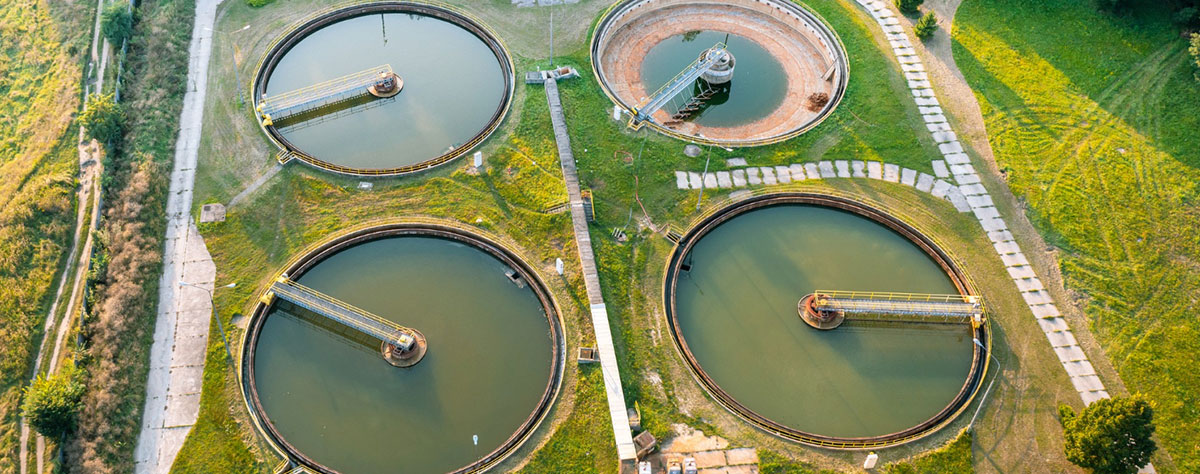
Sewage treatment is a process used to remove pollutants from wastewater and convert it into waste that can be returned to the water cycle. Once returned to the water cycle, the waste has an acceptable impact on the environment or is reused for various purposes (called water recovery).
The treatment process takes place in a sewage treatment plant (biological wastewater treatment). There are different types of wastewater that are treated in the appropriate type of wastewater treatment plant. For domestic wastewater (also called municipal wastewater), the treatment plant is called a wastewater treatment plant.
For industrial wastewater, treatment takes place either in a separate industrial wastewater treatment plant or in a compact wastewater treatment plant (usually after some form of pretreatment). Other types of wastewater treatment plants include agricultural wastewater treatment plants and drainage treatment plants.
Commonly used processes include phase separation (such as precipitation), biological and chemical processes (such as oxidation) or polishing. The main by-product from wastewater treatment plants is a type of sludge that is usually treated in the same or another wastewater treatment plant.
Biogas can be another by-product if anaerobic treatment processes are used. Some effluents may be highly treated and reused as recovered water. The main purpose of wastewater treatment is to ensure that treated wastewater can be disposed of or reused safely. However, before treatment, the disposal or reuse options must be considered in order to use the correct wastewater treatment process.
We, at Tycheros-Chatzis Co. with decades of experience, we offer effective solutions for managing the waste generated by your business, protecting the environment, with facilities that produce excellent results, with quality construction and turnkey.
Contact us and provide a solution to the sewage problem. Click here, leave your details and we will contact you!