
Level formation (vid)
Final level formation works in biological wastewater treatment facilities



Final level formation works in biological wastewater treatment facilities

Sludge thickening is an important process in the context of biological wastewater treatment. This process focuses on reducing the mud’s moisture, creating a more concentrated mass that is easier to handle and dispose of. During biological wastewater treatment, microorganisms such as bacteria and other microbes are used to break down

A decanter is an essential component of a wastewater treatment installation, specifically used for the separation and clarification of solids and liquids. It is a mechanical device designed to achieve efficient sedimentation and separation of suspended solids from wastewater or slurry. The operation of a decanter revolves around the principle

Directive 2004/35 / EC of the European Parliament and of the Council of 21 April 2004 on environmental liability for the prevention and remediation of environmental damage THE EUROPEAN PARLIAMENT AND THE COUNCIL OF THE EUROPEAN UNION, Taking into consideration: Having regard to the Treaty establishing the European Community, and
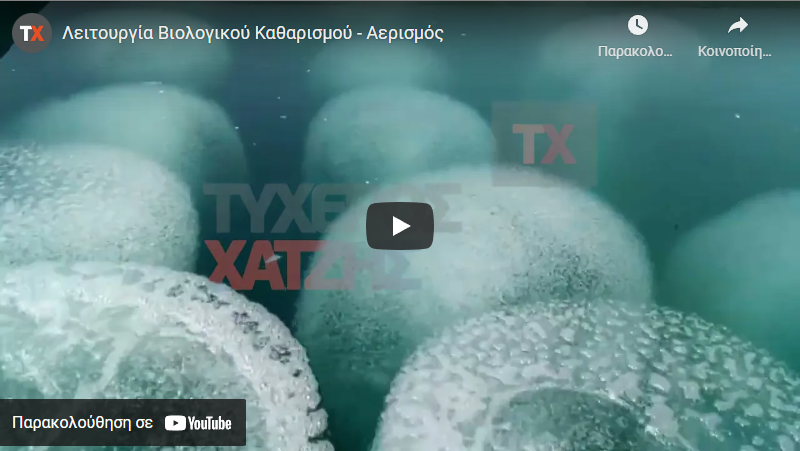
Biological sewage treatment function. Underwater ventilation stage.

Ideal solutions for large hotel units and rental apartment units. By the method of active mud in tanks with air supply. The method of biological wastewater treatment The method of activated sludge in air-fed tanks – which contains the necessary for the metabolism of organic oxygen – through blowers and diffusers, is the

Κ.Υ.Α. for liquid waste We present to you the relevant JMCs concerning liquid waste. More information on the “Polluter Pays” instruction can be found in our respective article by clicking here. For liquid waste and their disposal limits, those mentioned in the relevant Ministerial Decisions, Sanitary Ordinances and Prefectural Decisions

Directive 2004/35 / EC on environmental liability in relation to the prevention and remediation of environmental damage. What is the purpose of the directive? The directive lays down rules based on the “polluter pays” principle. This means that a company causing environmental damage is liable for it and must take
Directive 2004/35 / EC of the European Parliament and of the Council of 21 April 2004 on environmental liability for the prevention and remediation of environmental damage THE EUROPEAN PARLIAMENT AND THE COUNCIL OF THE EUROPEAN UNION, Taking into consideration: Having regard to the Treaty establishing the European Community,
