


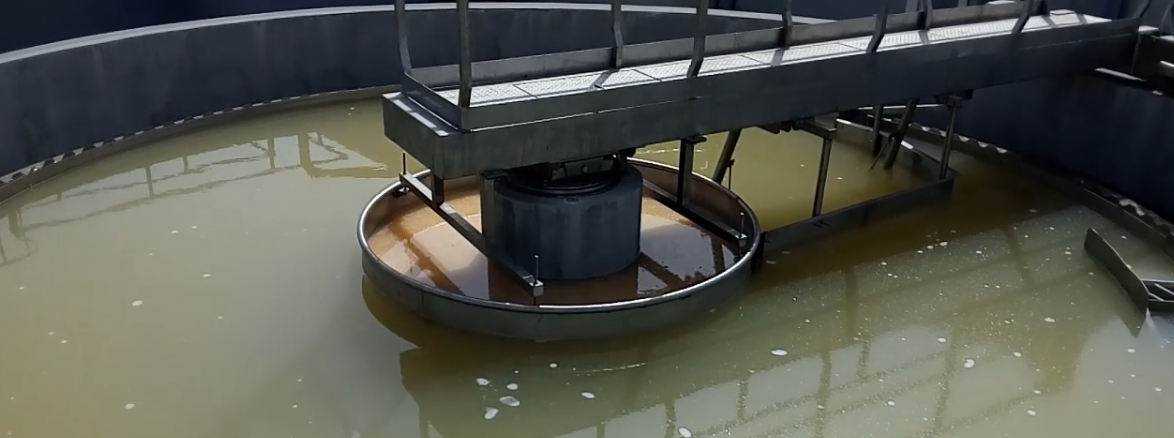
The sedimentation function is an important mechanism in a biological wastewater treatment plant, which contributes to the separation and removal of solid particles and human waste from the liquid part of the wastewater.
In the settling operation, the sewage enters a large tank or deep trench and is allowed to settle for a period of time. During this period, solids such as silt particles, sludge and other waste settle to the bottom of the tank.
Sedimentation is based on the action of gravity. Solid substances are heavier than the liquid part of the sewage, so sooner or later they sink to the bottom. This process occurs naturally and does not require external energy.
After the settling period is over, the clear liquid containing less solid particles than the original sewage flow is removed from the surface by means of overflow or other mechanisms. The clear liquid is transferred to the next stage of treatment, often in a biological vessel where it is further treated to remove organic contaminants.
Sedimentation is important in reducing the load in the next phase of processing, as it helps to reduce the amount of solid particles to be handled. This helps to improve the performance of the biological sewage treatment plant and reduces the possibility of problems such as pipe clogging and sludge deposition.
Overall, the sedimentation operation is an important step in wastewater treatment, offering the possibility of removing solids and providing a cleaner liquid that can be subjected to subsequent treatment phases or reused.
The biological sewage treatment plant can use different types of sedimentation, such as primary sedimentation and secondary sedimentation. Primary settling refers to the first round of settling that takes place in the facility and removes larger particles and high-density components such as sand and earthy materials. Secondary sedimentation refers to performing additional rounds of sedimentation to remove finer particles and hazardous waste.
Biological wastewater treatment plants usually combine sedimentation with other processes, such as biological treatment, to achieve complete and effective wastewater treatment.
The purpose of sedimentation in a biological wastewater treatment plant is to reduce the load on the next stage of treatment, as well as to produce sludge that can be treated. Effective settling reduces the number of solid particles to be handled, improves the quality of the treated liquid, and reduces the potential for problems such as clogging of ducts and overgrowth of microorganisms in subsequent treatment phases.
Overall, the sedimentation function in a biological wastewater treatment plant offers significant benefits, helping to achieve better levels of wastewater cleanliness and ensuring environmental health and safety.